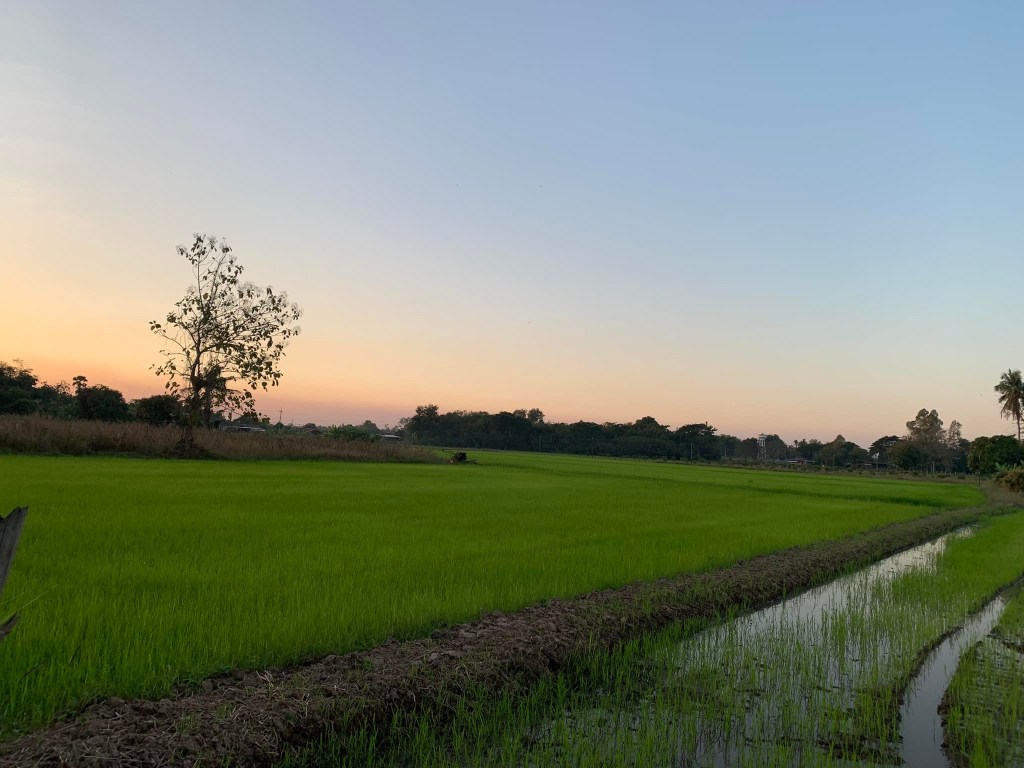
Phasuk Longevity | 23 October 2026
Introduction: Sleep Out of Step with the Sun
The simplest natural therapy for poor sleep is free and rises every morning: sunlight. For most of human history, people woke with the dawn and slept soon after dusk. Today many people spend close to 90% of their time indoors (Klepeis et al., 2001), under lighting that is too dim by day and too bright by night. The result is a body clock that drifts later, nights that start late, and mornings that feel heavy.
Naturopathy (natural therapy) holds that health returns when we live in harmony with nature’s rhythms. Modern circadian science now supports this idea with strong evidence. Light, especially bright morning daylight, is the most powerful signal that sets the human body clock (Blume et al., 2019; Roenneberg & Merrow, 2016).
This article explains how the body clock works, why morning sunlight matters, why evening darkness matters just as much, and how to build a simple daily routine that lets you wake and sleep with the sun.
How the Body Clock Works
Every cell in the body keeps time, but one master clock leads them all: the suprachiasmatic nucleus (SCN), a small cluster of nerve cells in the hypothalamus. Left alone in constant dim light, this clock runs slightly longer than 24 hours, about 24.2 hours on average (Czeisler et al., 1999). Without a daily reset, bedtime and waking time slowly drift later.
Light is the daily reset button. Special light sensors in the retina, the intrinsically photosensitive retinal ganglion cells (ipRGCs), contain the pigment melanopsin and respond most strongly to blue-rich daylight (Hattar et al., 2002). They send a direct signal to the SCN, which then times the hormones and rhythms of the whole body.
Morning light resets the master clock, which times melatonin and cortisol
1,000-100,000 lux outdoors
melanopsin light sensors
in the hypothalamus
↓ timing signals to the whole body ↓
melatonin stays low by day and rises after dusk
cortisol peaks soon after waking: alert and energised
temperature, digestion, appetite and alertness
Two hormones show this rhythm clearly:
- Melatonin, the hormone of darkness. The pineal gland releases it in the evening as light fades, which lowers body temperature and opens the gate to sleep. Bright light at night suppresses it (Lewy et al., 1980).
- Cortisol, the hormone of morning energy. It rises in the last hours of sleep and peaks shortly after waking, helping us feel alert and ready for the day.
When light, meals, activity, and sleep all happen at regular, sun-aligned times, the master clock and the body clocks stay in step. When they are irregular, the clocks fall out of sync, a state linked to poor sleep, low mood, and metabolic problems (Roenneberg & Merrow, 2016).
Why Morning Sunlight Matters
Light in the early morning moves the body clock earlier; light in the late evening pushes it later. This timing effect is called the phase response curve, and it is the scientific core of “rising with the sun” (Khalsa et al., 2003). A daily dose of morning daylight corrects the clock’s natural tendency to drift late, so sleepiness arrives earlier and more reliably at night.
Daylight is also far stronger than indoor light. A typical room gives about 100 to 500 lux, while outdoor daylight gives roughly 1,000 lux on a cloudy day and up to 100,000 lux in full sun. Even 20 to 30 minutes outdoors in the morning delivers more circadian signal than a whole day under office lights (Wirz-Justice et al., 2021).
What the research shows
| Study | Design | Key finding |
|---|---|---|
| Wright et al. (2013) | Adults camped one week under natural light only. | Light exposure rose about 4-fold; the melatonin rhythm moved about 2 hours earlier and aligned with sunrise and sunset. |
| Stothard et al. (2017) | Winter camping and weekend camping trips | One weekend outdoors advanced the body clock by about 1.4 hours. |
| Figueiro et al. (2017) | Office workers, high vs. low morning light | Higher morning light: faster sleep onset, better sleep quality, lower depression scores |
| Khalsa et al. (2003) | Laboratory bright-light pulses at different hours | Morning light advances the clock; evening light delays it. |
Benefits of morning sunlight for sleep balance
- Earlier, steadier sleep onset. Melatonin starts rising earlier in the evening, so falling asleep becomes easier.
- Deeper, more refreshing sleep. A well-timed clock places the deepest sleep in the first half of the night.
- Brighter mornings and mood. Morning light boosts alertness and supports mood, which is why light therapy is a standard treatment for seasonal depression (Blume et al., 2019).
- Better metabolic timing. A clock anchored to daylight keeps appetite, blood sugar control, and digestion in step with the day (Roenneberg & Merrow, 2016).
- Vitamin D as a bonus. Sun on the skin supports vitamin D production, although the clock effect works through the eyes, not the skin (Holick, 2007).
The Other Half: Evening Darkness
Morning light only works fully when evenings are dim. Bright screens and room lights after sunset tell the master clock that it is still daytime. In a controlled study, reading on a light-emitting tablet before bed delayed melatonin, made it harder to fall asleep, and left people less alert the next morning compared with reading a printed book (Chang et al., 2015). Ordinary room light before bedtime also suppressed melatonin and shortened its nightly duration by about 90 minutes (Gooley et al., 2011).
An international expert consensus now gives clear light targets for healthy adults (Brown et al., 2022):
| Time of day | Recommended light (melanopic EDI) | In practice |
|---|---|---|
| Daytime | At least 250 lux at eye level | Go outdoors, sit by a window, open curtains |
| Evening, 3 hours before bed | No more than 10 lux | Warm, dim lamps; screens on night mode or off |
| During sleep | No more than 1 lux | A dark bedroom; blackout curtains or an eye mask |
In simple terms: bright days, dim evenings, and dark nights. This is exactly the light pattern our ancestors lived with, and it is the pattern natural therapy seeks to restore.
A Sun-Aligned Daily Rhythm: A Natural-Therapy Routine
The goal is not perfection but regularity: the same wake time, the same light pattern, and the same meal times, day after day. Most people notice easier sleep within one to two weeks.
A sun-aligned day: bright mornings, dim evenings, dark nights
Wake at the same time daily
20-30 min of outdoor light
Look at the sky, not the sun
Breakfast in daylight
Walk, yoga or garden work
outdoors when possible
Daylight break outdoors
Main meal; last caffeine
Nap under 20 min, if needed
Exercise or brisk walk
Watch the sunset if possible
Light dinner 3 h before bed
Dim, warm lamps only
Screens off 1 h before bed
Warm bath, breathing, prayer
Sleep in a dark, cool room
About 7-9 hours of sleep
Under 1 lux; no screens
Seven practices to reset your sleep with the sun
- Fix your wake time first. Get up at the same time every day, weekends included, ideally within an hour of sunrise. A regular wake time is the anchor of the whole rhythm.
- Greet the morning sun. Within 30 to 60 minutes of waking, spend 20 to 30 minutes outdoors: a walk, gardening, tai chi, yoga, or breakfast on a balcony. On cloudy days, stay out a little longer. Do not look directly at the sun and do not wear sunglasses for this session unless needed for eye protection.
- Move your body in daylight. Morning and early-afternoon exercise also helps shift the clock earlier, adding to the effect of light (Youngstedt et al., 2019).
- Eat with the sun. Have breakfast in daylight, make lunch the main meal, and finish a light dinner about three hours before bed. Limit caffeine after midday.
- Keep your day bright. Work near a window and take short outdoor breaks, aiming for at least 250 lux at eye level during the day (Brown et al., 2022).
- Let the evening fade. After sunset, switch to warm, dim lamps. Stop screens about one hour before bed, or use night mode at the lowest brightness. A warm shower, herbal tea such as chamomile, slow breathing, prayer, or meditation signal the body to rest.
- Sleep in darkness. Keep the bedroom dark, quiet, and cool, and aim for 7 to 9 hours of sleep for adults and 7 to 8 hours for adults aged 65 or older (Hirshkowitz et al., 2015).
For people who want a gentle start, shift your wake time 15 minutes earlier every few days, pairing each new wake time with morning light. Abrupt changes are harder to keep.
Special Considerations and Safety
- Protect eyes and skin. Never gaze at the sun. Early-morning light, before about 9 a.m. in tropical countries such as Thailand, carries lower UV levels; for longer exposure, use a hat and sunscreen.
- Night-shift workers need a tailored plan; timed light and darkness can help but should be planned with an occupational-health or sleep professional.
- Older adults often receive less daylight and have yellowing lenses that filter light, so they may need longer outdoor time (Wirz-Justice et al., 2021).
- Bipolar disorder, eye disease, or light-sensitizing medicines: consult a doctor before starting intensive light exposure or light therapy.
- When to seek help: loud snoring with pauses in breathing, persistent insomnia lasting more than three months, or severe daytime sleepiness—need medical assessment. Natural therapy supports, but does not replace, diagnosis and treatment.
Conclusion
Rising with the sun is not nostalgia; it is biology. The body clock runs slightly longer than a day and needs light to reset it every morning. Bright morning sunlight moves the clock earlier, dim evenings allow melatonin to rise, and dark nights protect deep sleep. Combined with regular waking, daylight movement, and sun-aligned meals, these simple natural therapies can restore a balanced sleep-wake cycle without cost and with few side effects.
Key messages
- Same wake time every day, close to sunrise.
- 20 to 30 minutes of outdoor morning light.
- Bright days, dim evenings, dark nights.
- Eat, move, and rest in step with the sun.
References
- Blume, C., Garbazza, C., & Spitschan, M. (2019). Effects of light on human circadian rhythms, sleep, and mood. Somnologie, 23(3), 147–156. https://doi.org/10.1007/s11818-019-00215-x
- Brown, T. M., Brainard, G. C., Cajochen, C., Czeisler, C. A., Hanifin, J. P., Lockley, S. W., Lucas, R. J., Münch, M., O’Hagan, J. B., Peirson, S. N., Price, L. L. A., Roenneberg, T., Schlangen, L. J. M., Skene, D. J., Spitschan, M., Vetter, C., Zee, P. C., & Wright, K. P., Jr. (2022). Recommendations for daytime, evening, and nighttime indoor light exposure to best support physiology, sleep, and wakefulness in healthy adults. PLOS Biology, 20(3), e3001571. https://doi.org/10.1371/journal.pbio.3001571
- Chang, A.-M., Aeschbach, D., Duffy, J. F., & Czeisler, C. A. (2015). Evening use of light-emitting eReaders negatively affects sleep, circadian timing, and next-morning alertness. Proceedings of the National Academy of Sciences, 112(4), 1232–1237. https://doi.org/10.1073/pnas.1418490112
- Czeisler, C. A., Duffy, J. F., Shanahan, T. L., Brown, E. N., Mitchell, J. F., Rimmer, D. W., Ronda, J. M., Silva, E. J., Allan, J. S., Emens, J. S., Dijk, D.-J., & Kronauer, R. E. (1999). Stability, precision, and near-24-hour period of the human circadian pacemaker. Science, 284(5423), 2177–2181. https://doi.org/10.1126/science.284.5423.2177
- Figueiro, M. G., Steverson, B., Heerwagen, J., Kampschroer, K., Hunter, C. M., Gonzales, K., Plitnick, B., & Rea, M. S. (2017). The impact of daytime light exposures on sleep and mood in office workers. Sleep Health, 3(3), 204–215. https://doi.org/10.1016/j.sleh.2017.03.005
- Gooley, J. J., Chamberlain, K., Smith, K. A., Khalsa, S. B. S., Rajaratnam, S. M. W., Van Reen, E., Zeitzer, J. M., Czeisler, C. A., & Lockley, S. W. (2011). Exposure to room light before bedtime suppresses melatonin onset and shortens melatonin duration in humans. The Journal of Clinical Endocrinology & Metabolism, 96(3), E463–E472. https://doi.org/10.1210/jc.2010-2098
- Hattar, S., Liao, H.-W., Takao, M., Berson, D. M., & Yau, K.-W. (2002). Melanopsin-containing retinal ganglion cells: Architecture, projections, and intrinsic photosensitivity. Science, 295(5557), 1065–1070. https://doi.org/10.1126/science.1069609
- Hirshkowitz, M., Whiton, K., Albert, S. M., Alessi, C., Bruni, O., DonCarlos, L., Hazen, N., Herman, J., Katz, E. S., Kheirandish-Gozal, L., Neubauer, D. N., O’Donnell, A. E., Ohayon, M., Peever, J., Rawding, R., Sachdeva, R. C., Setters, B., Vitiello, M. V., Ware, J. C., & Adams Hillard, P. J. (2015). National Sleep Foundation’s sleep time duration recommendations: Methodology and results summary. Sleep Health, 1(1), 40–43. https://doi.org/10.1016/j.sleh.2014.12.010
- Holick, M. F. (2007). Vitamin D deficiency. New England Journal of Medicine, 357(3), 266–281. https://doi.org/10.1056/NEJMra070553
- Khalsa, S. B. S., Jewett, M. E., Cajochen, C., & Czeisler, C. A. (2003). A phase response curve to single bright light pulses in human subjects. The Journal of Physiology, 549(3), 945–952. https://doi.org/10.1113/jphysiol.2003.040477
- Klepeis, N. E., Nelson, W. C., Ott, W. R., Robinson, J. P., Tsang, A. M., Switzer, P., Behar, J. V., Hern, S. C., & Engelmann, W. H. (2001). The National Human Activity Pattern Survey (NHAPS): A resource for assessing exposure to environmental pollutants. Journal of Exposure Analysis and Environmental Epidemiology, 11(3), 231–252. https://doi.org/10.1038/sj.jea.7500165
- Lewy, A. J., Wehr, T. A., Goodwin, F. K., Newsome, D. A., & Markey, S. P. (1980). Light suppresses melatonin secretion in humans. Science, 210(4475), 1267–1269. https://doi.org/10.1126/science.7434030
- Roenneberg, T., & Merrow, M. (2016). The circadian clock and human health. Current Biology, 26(10), R432–R443. https://doi.org/10.1016/j.cub.2016.04.011
- Stothard, E. R., McHill, A. W., Depner, C. M., Birks, B. R., Moehlman, T. M., Ritchie, H. K., Guzzetti, J. R., Chinoy, E. D., LeBourgeois, M. K., Axelsson, J., & Wright, K. P., Jr. (2017). Circadian entrainment to the natural light-dark cycle across seasons and the weekend. Current Biology, 27(4), 508–513. https://doi.org/10.1016/j.cub.2016.12.041
- Wirz-Justice, A., Skene, D. J., & Münch, M. (2021). The relevance of daylight for humans. Biochemical Pharmacology, 191, 114304. https://doi.org/10.1016/j.bcp.2020.114304
- Wright, K. P., Jr., McHill, A. W., Birks, B. R., Griffin, B. R., Rusterholz, T., & Chinoy, E. D. (2013). Entrainment of the human circadian clock to the natural light-dark cycle. Current Biology, 23(16), 1554–1558. https://doi.org/10.1016/j.cub.2013.06.039
- Youngstedt, S. D., Elliott, J. A., & Kripke, D. F. (2019). Human circadian phase-response curves for exercise. The Journal of Physiology, 597(8), 2253–2268. https://doi.org/10.1113/JP276943



ใส่ความเห็น