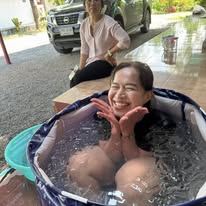
Under the morning sky of Phichai, Uttaradit, a short plunge into icy water has become one of the most talked-about experiences at Phasuk Wellness Farm. It takes a few breaths of courage and a couple of minutes in the water, and you step out feeling awake, light, and surprisingly calm. Here is what science says about ice bathing, how to do it safely, and how to make it part of a nourishing day at the farm.
What happens in your body during an ice bath?
The moment you enter cold water, your body triggers the cold shock response: a sharp gasp, faster breathing, and a rising heart rate. This lasts roughly the first 1 to 3 minutes and is the most important reason to enter slowly and calmly (Tipton et al., 2017). After that, breathing settles and the body shifts into a steady, alert state.
- Alertness and mood: In a classic laboratory study, one hour of head-out immersion at 14°C raised blood noradrenaline by about 530% and dopamine by about 250%, chemicals linked to focus, energy, and mood (Šrámek et al., 2000). Many guests describe a clear, uplifted feeling for hours afterward.
- Muscle recovery: Cold water immersion reduces post-exercise muscle soreness, with the best results seen at about 11–15°C for 11–15 minutes (Machado et al., 2016).
- Metabolic health: Regular cold exposure activates brown adipose tissue, a type of fat that burns energy to produce heat. Winter swimmers who combined cold and heat showed greater cold-induced heat production (Søberg et al., 2021).
- Stress resilience: Practicing calm breathing while the body feels a controlled stress may train the nervous system to recover faster from everyday pressure (Espeland et al., 2022).
Ice bathing and immune resilience
Can cold water help your body defend itself? The evidence is promising, though still developing:
- A randomized trial of more than 3,000 adults in the Netherlands found that people who ended their daily hot shower with 30–90 seconds of cold water took 29% fewer sick days from work, although the number of illness days themselves did not change (Buijze et al., 2016). Cold may help people feel well enough to keep functioning.
- Volunteers trained in breathing techniques, meditation, and cold exposure released more adrenaline and produced fewer inflammatory substances when exposed to a bacterial toxin, with milder flu-like symptoms than untrained volunteers (Kox et al., 2014). This suggests the nervous system can influence the immune response.
- Reviews of regular cold-water swimmers report possible benefits for immune function, mood, and insulin sensitivity, while noting that many studies are small and more research is needed (Espeland et al., 2022).
At Phasuk, we see ice bathing as one part of rebuilding immunity, alongside the foundations that matter most: good sleep, whole-food meals, daily movement, time in nature, and a calm mind.
How long should you stay in?
More is not better. A short, regular practice brings benefits with far less risk. Our guide at the farm:
| Level | Water temperature | Time in water |
|---|---|---|
| First-timer | 12–15°C | 30 seconds – 2 minutes |
| Returning guest | 10–15°C | 2 – 5 minutes |
| Experienced | 8–12°C | Up to 10 minutes (with staff) |
- About 11 minutes of cold exposure per week in total, spread over 2–4 sessions, was associated with metabolic benefits in winter swimmers (Søberg et al., 2021).
- Get out immediately if you shiver uncontrollably, feel numb, dizzy, confused, or short of breath.
- If you train for muscle strength or size, avoid ice baths within about 4 hours after weight training, as regular post-exercise cold immersion can blunt muscle gains (Roberts et al., 2015).
How to prepare
Check your health first.
Please talk with your doctor before ice bathing, and let our team know if you have heart disease, uncontrolled high blood pressure, arrhythmia, a history of stroke, Raynaud’s phenomenon, cold urticaria, epilepsy, poorly controlled diabetes, or if you are pregnant. Sudden cold raises heart rate and blood pressure, which can be dangerous for these conditions (Tipton et al., 2017).
Before the plunge
- Eat lightly 1–2 hours before. Do not plunge on a full stomach or when very hungry.
- No alcohol on the day of your session.
- Drink water and wear a swimsuit. Bring a towel, warm clothes, and slippers.
- Warm up gently with 5–10 minutes of stretching or walking in the garden.
- Practice slow breathing: inhale through the nose for 4 counts, exhale through the mouth for 6 counts. Avoid forceful hyperventilation, and never hold your breath under water.
In the water
- Never ice bathe alone. A Phasuk team member stays with you throughout.
- Enter slowly: feet, then legs, then waist and chest. Keep your head above water.
- Focus on long, slow exhales for the first minute while the cold shock passes.
After the plunge
- Dry off and dress warmly right away, then rewarm naturally with gentle movement and a warm herbal drink.
- Avoid a very hot shower immediately; body temperature can keep dropping for a few minutes after you leave the water (the “afterdrop”), so rewarm gradually.
- Take a few quiet minutes to notice how your body and mind feel.
Good things to do at Phasuk Wellness Farm
An ice bath is best enjoyed as part of a full day of slow, healthy living. Pair your cold plunge with:
- Morning breathing and stretching in the garden before your plunge to set a calm rhythm for the day.
- Herbal garden walk through our garden designed around the four Thai elements, with a longevity zone of herbs that support healthy aging.
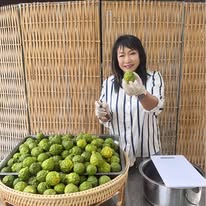
- Essential oil distillation: watch fresh herbs such as kaffir lime, lemongrass, ginger, and plai become fragrant oils, and learn how to use them for relaxation.
- Warm herbal drinks and healthy farm meals to rewarm and nourish your body after the cold.
- The “Im Ot Lot Uan” wellness retreat (Eat Well, Fast Well, Slim Down), available year-round by consultation, for guests who want a structured program for weight and metabolic health.
- Longevity programs that bring together nutrition, movement, sleep, stress management, and community, guided by a specialist nurse and lifestyle medicine coach.
Book your ice bath experience.
Phasuk Farmstay & Resort, Phichai, Uttaradit. Contact us on LINE ID: jeab51031287 to book a session or ask which program suits you. First-timers are warmly welcome; we will guide you every step of the way.
This article is for general health education and is not a substitute for medical advice. Please consult your doctor before starting cold water immersion, especially if you have a medical condition.
References
- Buijze, G. A., Sierevelt, I. N., van der Heijden, B. C. J. M., Dijkgraaf, M. G., & Frings-Dresen, M. H. W. (2016). The effect of cold showering on health and work: A randomized controlled trial. PLoS ONE, 11(9), e0161749. https://doi.org/10.1371/journal.pone.0161749
- Espeland, D., de Weerd, L., & Mercer, J. B. (2022). Health effects of voluntary exposure to cold water: A continuing subject of debate. International Journal of Circumpolar Health, 81(1), 2111789. https://doi.org/10.1080/22423982.2022.2111789
- Kox, M., van Eijk, L. T., Zwaag, J., van den Wildenberg, J., Sweep, F. C. G. J., van der Hoeven, J. G., & Pickkers, P. (2014). Voluntary activation of the sympathetic nervous system and attenuation of the innate immune response in humans. Proceedings of the National Academy of Sciences, 111(20), 7379–7384. https://doi.org/10.1073/pnas.1322174111
- Machado, A. F., Ferreira, P. H., Micheletti, J. K., de Almeida, A. C., Lemes, Í. R., Vanderlei, F. M., Netto Junior, J., & Pastre, C. M. (2016). Can water temperature and immersion time influence the effect of cold water immersion on muscle soreness? A systematic review and meta-analysis. Sports Medicine, 46(4), 503–514. https://doi.org/10.1007/s40279-015-0431-7
- Roberts, L. A., Raastad, T., Markworth, J. F., Figueiredo, V. C., Egner, I. M., Shield, A., Cameron-Smith, D., Coombes, J. S., & Peake, J. M. (2015). Post-exercise cold water immersion attenuates acute anabolic signalling and long-term adaptations in muscle to strength training. The Journal of Physiology, 593(18), 4285–4301. https://doi.org/10.1113/JP270570
- Søberg, S., Löfgren, J., Philipsen, F. E., Jensen, M., Hansen, A. E., Ahrens, E., Nystrup, K. B., Nielsen, R. D., Sølling, C., Wedell-Neergaard, A.-S., Berntsen, M., Loft, A., Kjær, A., Gerhart-Hines, Z., Johannesen, H. H., Pedersen, B. K., Karstoft, K., & Scheele, C. (2021). Altered brown fat thermoregulation and enhanced cold-induced thermogenesis in young, healthy, winter-swimming men. Cell Reports Medicine, 2(10), 100408. https://doi.org/10.1016/j.xcrm.2021.100408
- Šrámek, P., Šimečková, M., Janský, L., Šavlíková, J., & Vybíral, S. (2000). Human physiological responses to immersion into water of different temperatures. European Journal of Applied Physiology, 81(5), 436–442. https://doi.org/10.1007/s004210050065
- Tipton, M. J., Collier, N., Massey, H., Corbett, J., & Harper, M. (2017). Cold water immersion: Kill or cure? Experimental Physiology, 102(11), 1335–1355. https://doi.org/10.1113/EP086283


ใส่ความเห็น